Brought to Light (New Bedford): Lew Sayre Schwartz (1926-2011)
Every artist and writer hopes that some of their work will hang around
The late Lew Sayre Schwartz is an example of an artist who made waves in the fields he worked in, and even made a few in his native New Bedford, but whose creative life and history with the city may not be well known in the current day.
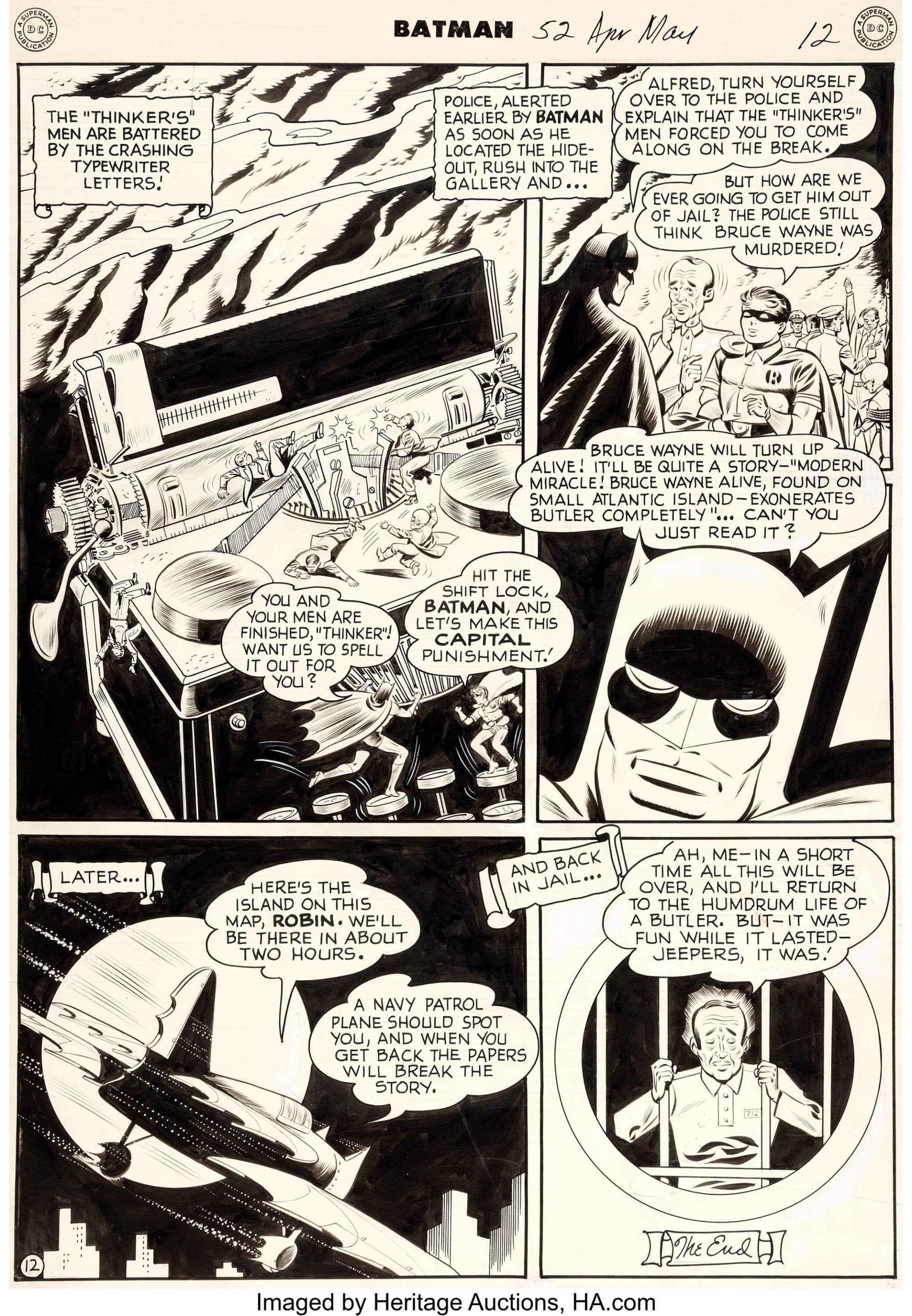
Schwartz, born in New Bedford in 1926, started his professional career in earnest in 1946 as a ghost artist on Batman, and created his last major work in 2001 with a graphic novel adaptation of Moby-Dick, published by the City of New Bedford in collaboration with then-Standard Times editor Stever Urbon (charged with condensing the 600-plus page novel into a 34 page comic script), artist Dick Goirdano, and letterer John Costanza.
You might expect that you’re about to read a career retrospective of a lifelong comics creator. Far from it.
Schwartz most definitely led a creative life, but his career moved from comics to advertising to film to television before finding its way back to comics later in life. His career brought him into contact with a range of notable people—Batman creator Bob Kane, Barbra Streisand, Walter Cronkite, and Stanley Kubrick, among others.
Schwartz grew up in what he described as “a not great neighborhood in New Bedford.” He attended the Swain School before moving to New York City. A New Bedford friend, with whom he’d move to New York, turned him onto the work of the great Milton Caniff, creator of Terry &the Pirates and Steve Canyon. In New York, Schwartz studied at the Art Students League, where Caniff taught. Caniff became a mentor and father-figure to Schwartz. Decades later, Schwartz would highlight Caniff’s life and creative legacy in a documentary about the cartoonist, funded by Schwartz himself.[i]
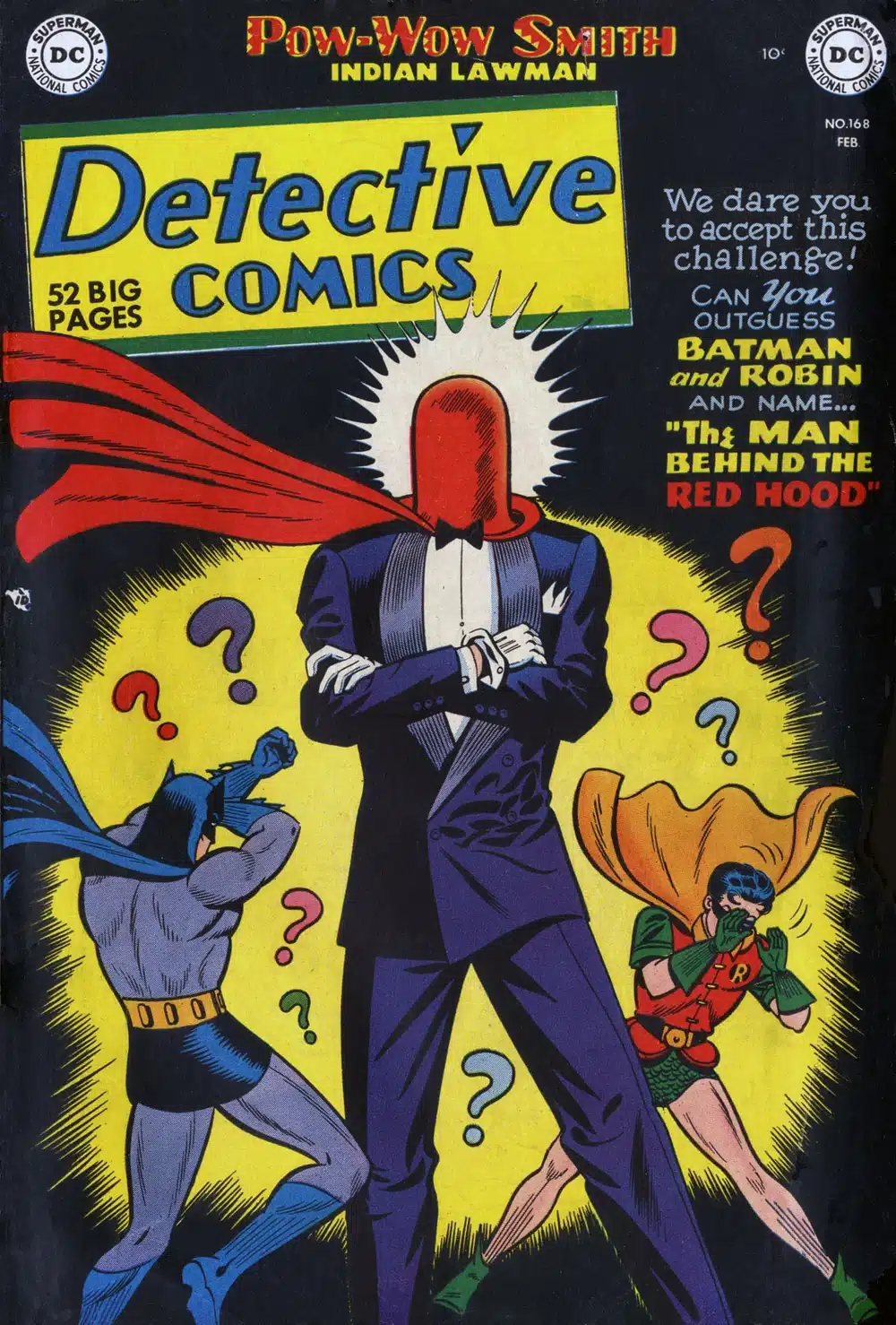
Following art school, Schwartz met Bob Kane in 1946, when Kane hired Schwartz to work on a proposed comic strip Kane and The Spirit creator Will Eisner came up with called Dirty Diamond. The strip didn’t sell, but Kane soon offered Schwartz work as a ghost artist on Batman. [ii]
It’s worth noting that by 1946, Bob Kane was the creative face of Batman, with all stories and artwork being credited to him, but written and drawn by other creators. It’s acknowledged that writer Bill Finger co-created Batman and his sidekick Robin and wrote many early stories, and artist Jerry Robinson helped create the Joker, Two Face, and Alfred, before taking over as lead artist in 1943, when Kane dedicated his energies to the syndicated Batman comic strip.
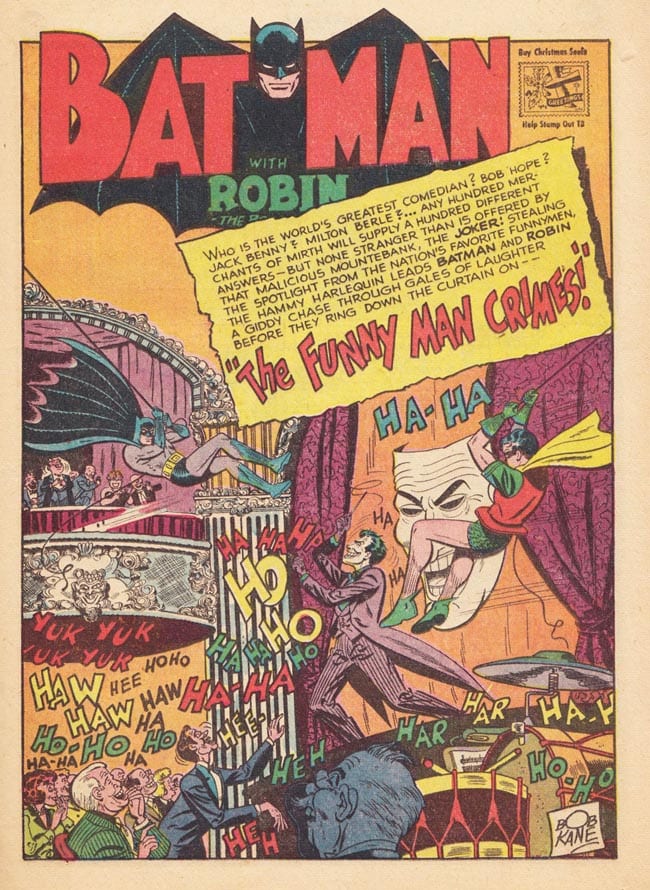
Other ghost artists, such as Schwartz and Dick Sprang, became a part of the regular artist rotation. Aside from drawing roughly 120 Batman stories, Schwartz co-created a character—Deadshhttps://massculturalcouncil.org/ot—who has not only been a part of the DC Comics universe since the 1940s, but has made appearances in animated TV shows and the first Suicide Squad movie, played by Will Smith.
Schwartz never wanted credit while drawing Batman. “Listen, my mentor, as a kid, was Caniff, and this guy was a giant in the business and probably one of the most influential cartoonists that ever lived. But I would never in a million years tell Milt that I was drawing Batman. That was very demeaning.”[iii] (When DC Comics issued its Batman: The Golden Age Omnibus volumes a few years ago, all of Kane’s ghost writers and artists received their proper credit.)
In 1953, Schwartz decided, “I couldn’t draw another panel of Batman… I signed on for a Cartoonists Society trip to Korea” during the War. Unfortunately, he couldn’t escape Batman: “…morning, noon, and night, in hospitals, in officers clubs, in enlisted men’s clubs, [I was] drawing Batman!” [iv]
After Korea, Schwartz moved into advertising at the J. Walter Robinson agency, barely lasting a week in their art department before seeking out work from King Features, with whom he’d worked while on Batman. But the person who ran the Robinson TV department liked Schwartz’s work and hired him as an art director. Against his wishes, Schwartz was soon promoted to the role of producer in the firm’s film production department.[v]
That led to an entirely different career path in advertising and led to Schwartz forming Ferro, Moqubqub, & Schwartz with Pablo Ferro and Fall River-native Fred Moqubqub. Thanks in part to work they did with Jerome Robinson, the famed choreographer and co-director of West Side Story, the firm grossed $1 million dollars in 1961 money—the equivalent of $11 million today.[vi]
The agency’s work caught the eye of Stanley Kubrick, who enlisted them to create the now-iconic credits of Dr. Strangelove. Schwartz himself sourced the military atomic bomb footage used at the film’s climax.
As the 60s closed, Schwartz started his own company, making films and contributing to Sesame Street and producing network specials, including one for Barbra Streisand. He won four Emmys during this phase of his career.
What about Schwartz’s New Bedford connection during this time? The city and Moby-Dick was certainly on his mind in the mid ‘70s. Schwartz wrote a report urging the city to embrace its legacy with Melville and his most famous novel.[vii] Nothing came of it at the time, but Schwartz wasn’t done with New Bedford or Moby-Dick just yet.
Schwartz produced documentaries on Norman Rockwell and Schwartz’s mentor, Caniff (complete with narration by Walter Cronkite, himself a big fan of Caniff’s) before returning to sequential art in the late 1980s with a weekly comic strip, The Dinosaur Group, for the Standard Times.
Years later, Schwartz discussed the idea of a Moby-Dick comic book with his friend, consultant Gordon H. Wolfe, and Standard Times Editor Steve Urbon. The concept had been a part of Schwartz’s previous proposal to the city, but this time it gained traction. Schwartz designed the book and co-wrote it with Urbon, with the intent of targeting middle school students. Jay Avila from Spinner Publications was the layout artist for the book, and Melville consultant Irwin Marks from Acushnet, working at the New Bedford Whaling Museum at the time, was also involved in some capacity.
The one mystery about this version of Moby Dick (the comic version does away with the hyphen) is how Dick Giordano and John Costanza became involved in the project. Giordano was a legend at DC Comics. He was known in the comics field not only for his ink work on renowned artists such as Neal Adams and George Pérez; Giordano was also Vice President and Executive Editor at DC during the 1980s, a heyday that brought comics afficionados (and eventually TV and film fans) classics such as Crisis on Infinite Earths, Watchmen, and The Dark Knight Returns. Costanza is one of the greats letterers in comic book history, and his work was an integral part of many classic DC Comics stories in the ‘80s and ‘90s.
Schwartz clearly appreciated Giordano’s work on the book, saying that Giordano “added subtle changes that made the book blossom. This was the most pleasant collaboration that I can imagine. It’s the best I’ve ever had, without a doubt.”[viii]
This version of Moby Dick was a fitting capstone to Schwartz’s career, bringing him creatively back to the place he started. And much like the novel’s narrator, Ishmael, Schwartz could have hardly predicted all the things that happened on his journey from—and back to—the South Coast. Schwartz said at the time of the book’s release in 2001:
“For me, it has to do with New Bedford, with being 75, and with having a project I could leave behind that I thought had some real value. Every artist and writer hopes that some of their work will hang around.” [ix]
About the author Scott Bishop
Footnotes:
i – Alter Ego, issue 51, August 2005. Batman, Dr. Strangelove, and Everything in Between: A Talk with Lew Sayre Schwartz. Jon B. Cooke.
ii – Ibid.
iii – Nerd Team 30, An Interview with Lew Sayre Schwartz – A Golden Age Ghost for Batman. Bryan Stroud.
iv – Alter Ego, issue 51, August 2005.
v- Ibid.
vi – Ibid.
vii- The Standard Times, August 4, 2001. Moby-Dick, Comic Book. Robert Lovinger.
viii – Ibid.
ix -Ibid.
Quick summary for the entry for this article:
Lew Sayre Schwartz (1926-2011) was a New Bedford native whose creative life spanned comic books, advertising, and TV and film production. He’s best known as one of the ghost artists for Batman in the ‘40s and ‘50s; for his ad agency Ferro, Moqubqub, & Schwartz, who provided the title credits and atomic bomb footage for Stanley Kubrick’s Dr. Strangelove; and for a collaborative graphic novel adaptation of Moby Dick, created with legendary DC comic artist and editor Dick Giordano and Standard Times editor Steve Urbon, funded by the city of New Bedford and released in 2001.
Photo Info/Sources:
1. Lew Sayre Schwartz family photo published in The Comics Journal
2. Lew Sayre Schwartz Batman 52 splash page, The Comics Journal
3. Lew Sayre Schwartz Batman 52 story page, Comic Art Tracker
4. Lew Sayre Schwartz Detective Comics 168 cover, DC Fandom Database
5. Lew Sayre Schwartz Moby Dick cover. Cover art to the comic book adaptation of Moby Dick created by Lew Sayre Schwartz and funded by the City of New Bedford. Art by DC Comics legend Dick Giordano.
 The Artists Index is a 501(c)(3) nonprofit dedicated to documenting, promoting, and connecting the creative community across the South Coast. Through partnerships, live events, publications, podcasts, and digital media, the organization supports artists in being included, being counted, and being found.
The Salon Series is funded in part by a grant from the New Bedford Cultural Council, a local agency which is supported by the Mass Cultural Council, a state agency.

Our Gracious Sponsors.